Introduction
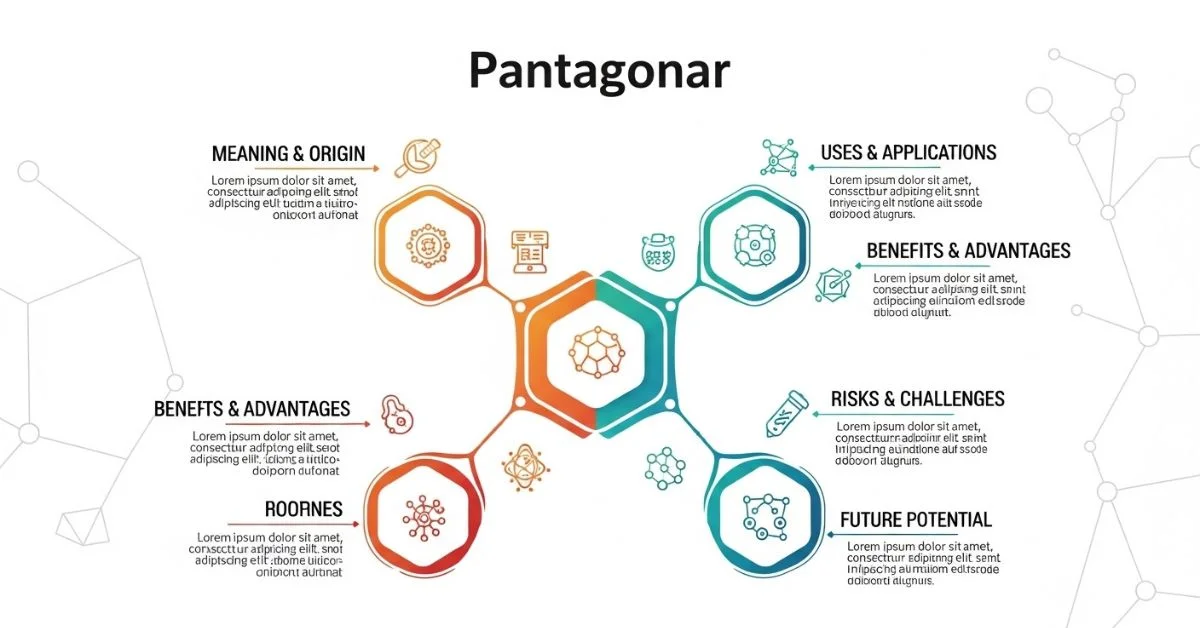
Pantagonar is a versatile concept used across technology, branding, and lifestyle domains to describe a holistic system built on five interconnected pillars. The term invites a balanced approach to complexity, enabling teams and individuals to plan, execute, and scale with clarity.
Five core pillars of Pantagonar (structure, adaptability, integration, efficiency, sustainability)
-
Structure: Establishes clear, layered foundations (governance, data models, security) so every component knows its place.
-
Adaptability: Enables rapid iteration, experimentation, and responsive changes in response to feedback or market shifts.
-
Integration: Ensures cohesive interaction among diverse components via standardized interfaces and workflows.
-
Efficiency: Optimizes resources, processes, and performance to deliver value faster and with less waste.
-
Sustainability: Focuses on long-term viability, including ethics, resilience, and environmental or social impact.
The Meaning and Symbolism of Pantagonar
Pantagonar conveys wholeness and balance across multiple dimensions. The prefix “panta” suggests “all” or “everything,” while “gonar” evokes structure, form, and design.
In branding and product development, Pantagonar signals a framework that harmonizes complexity with clarity, appealing to audiences seeking thoughtful, robust systems.
How Pantagonar Works in the Body of Systems (metaphor)
Think of inspired system as a five-layer organism: governance (structure), agile workflows (adaptability), interoperable components (integration), optimized operations (efficiency), and continuous learning for resilience (sustainability).
This metaphor helps teams diagnose misalignments: when adaptability fails to translate into reliable integrations, or when sustainability is neglected, performance can degrade.
Pantagonar in Technology and Innovation
-
In software and platforms-inspired design emphasizes modularity, clear interfaces, and scalable architectures that stay coherent as complexity grows.
-
It supports thoughtful innovation by balancing exploration (new features) with stability (security, governance).
Pantagonar as a Brand Identity
Brands adopting Pantagonar use a messaging framework that highlights five pillars. This communicates a disciplined approach to product quality, user experience, and ethical considerations.
Visual identity often mirrors the five-pillar concept through symmetry, modular layouts, and a consistent governance model in brand guidelines.
Core Technologies Behind Pantagonar
-
Standards-based interfaces (APIs, microservices)
-
Layered architecture and data governance
-
Automated testing, deployment pipelines, and observability
-
Sustainability metrics and impact reporting tools
Pantagonar in Lifestyle and Wellness
In wellness informs comprehensive programs that balance physical activity, mental health, nutrition, rest, and social connection.
It supports consumer apps and coaching services by providing a stable framework that scales as users’ needs evolve.
Pantagonar in Business and Industry
Organizations can apply Pantagonar to digital transformation initiatives, ensuring alignment among strategy, operations, IT, and customer experience.
The five pillars help teams prioritize investments, manage risk, and communicate progress clearly to stakeholders.
Panta gonar in Modern Culture and Society
The concept resonates with contemporary preferences for holistic, systems-thinking approaches.
It provides a flexible language for discussions about complexity, integration, and sustainability across culture, technology, and commerce.
Benefits and Limitations
Benefits: clarity across complex systems, scalable design, improved collaboration, and sustainable outcomes.
Limitations: as a conceptual framework, Pantagonar requires concrete metrics and disciplined execution to avoid vagueness or misapplication.
Who Should Use Pantagonar?
Product managers, software architects, brand strategists, CEOs guiding digital transformations, wellness program designers, and innovation teams seeking a balanced framework for growth.

Practical How-To: Implementing Pantagonar in Your Project
Step 1: Define the five pillars for your context (Structure, Adaptability, Integration, Efficiency, Sustainability).
Step 2: Map current systems to each pillar and identify gaps.
Step 3: Establish metrics for each pillar (e.g., governance maturity, deployment frequency, interface reliability, resource utilization, and sustainability impact).
Step 4: Create a five-pillar playbook with responsible owners, timelines, and review cadences.
Step 5: Iterate quarterly, refining integrations and scaling successful practices.
History and Origins
Pantagonar emerged as a modern, flexible label for multi-dimensional systems thinking, appealing to designers, technologists, and wellness professionals who value integrated approaches.
Why Pantagonar Matters in Today’s Digital World
As systems become more complex, a coherent five-pillar framework helps organizations maintain order, adapt to change, connect components, optimize performance, and focus on long-term resilience.
Potential Risks and Challenges
-
Risk of vagueness if pillars are not operationalized with metrics.
-
Danger of over-structuring, reducing agility if governance becomes overly onerous.
-
Requires cross-functional alignment and ongoing leadership commitment.
Case Examples (illustrative)
A tech platform uses Pantagonar to align product, data governance, security, and developer efficiency, achieving faster releases with fewer incidents.
A wellness app applies the five pillars to balance user experience, community support, privacy, and sustainability reporting.
Interlinking and References
-
Internal links: Connect to relevant content on your site that reinforces pillars, such as architecture guides, product playbooks, or sustainability reports.
-
External links: Reference credible sources on digital ecosystems, systems thinking, and sustainability in technology to support credibility and context.
-
Note: Use anchor text that naturally fits the surrounding content and avoids over-optimization.
Conclusion
Pantagonar offers a practical, five-pillar approach to managing complexity in today’s digital world. By focusing on structure, adaptability, integration, efficiency, and sustainability, organizations can design better systems, deliver value faster, and build lasting resilience. How could you apply to your next project to achieve clearer alignment and stronger outcomes?